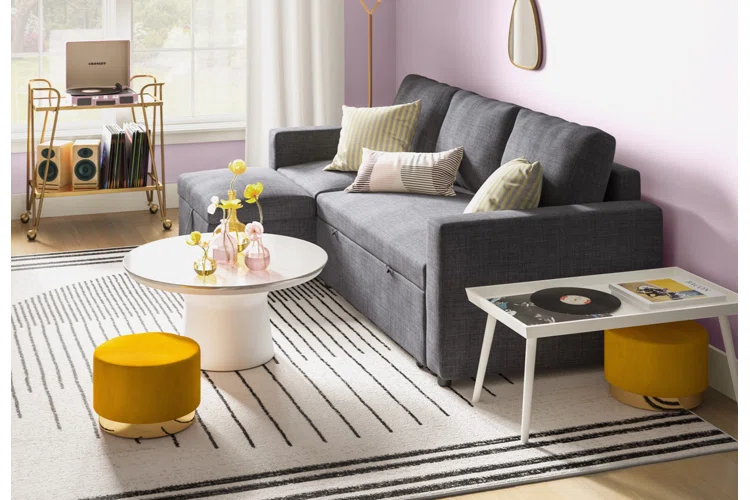
Let’s be honest. The line between work and home has not just blurred—it’s practically vanished. And if you live in a compact apartment or a cozy little house, that vanishing act creates a unique kind of chaos. Your dining table is now a desk. Your sofa is a conference call booth. Your sanity? Well, it’s clinging on for dear life.
That’s where the magic of intentional furniture comes in. We’re not just talking about a cute desk in the corner. We’re talking about a strategic overhaul for your hybrid work-life space—a design philosophy that turns cramped quarters into multifunctional havens. Here’s the deal: with the right pieces, your small dwelling can effortlessly pivot from “focus mode” to “family time” without you having to perform a furniture ballet every single day.
The Core Principles: More Than Just a Fold-Down Desk
Before we dive into specific pieces, let’s lay down some ground rules. Furnishing a small home office that also lives as your living space isn’t about buying the smallest stuff you can find. It’s about smart, adaptive design.
1. The Rule of Verticality
Floor space is gold. Wall space is… well, platinum. Look up. Those blank walls are your most underutilized asset. Shelving, wall-mounted desks, and tall, slender storage units draw the eye upward, creating a sense of airiness while keeping the floor clear.
2. The “Disappearing Act”
The best furniture for dual-purpose rooms often has a secret identity. Think foldable, stackable, hideable, and multi-use. When your workday ends, the work “zone” should be able to recede, visually and physically.
3. Psychological Zoning (Without Walls)
You can’t build a new wall, but you can create subtle boundaries. A room divider, a strategically placed bookshelf, or even a large area rug can signal a shift in function. It tells your brain, “This patch of floor is for work,” and later, “This is now for relaxation.” It’s surprisingly effective.
Must-Have Furniture Categories for Your Compact Command Center
Alright, let’s get practical. What should you actually be shopping for? Here are the categories that truly earn their keep.
The Transformative Surface
Your desk is the anchor. But in a small dwelling home office, it can’t just be a desk.
- Wall-Mounted Drop-Leaf Desks: The undisputed champion. Flips down for work, folds up flat against the wall when done. It’s like a secret agent desk.
- Nesting or C-Tables: A smaller side table that tucks under a larger one, or a sleek C-table that slides over your sofa arm. Perfect for a laptop when you need a change of scenery from your main station.
- The Convertible Dining Table: This is a big one. Look for dining tables with height-adjustable mechanisms or those with built-in storage for cables and notebooks. The transition from meal to meeting needs to be seamless.
Intelligent Storage
Clutter is the enemy of both productivity and peace. Storage here needs to be aggressive and clever.
A simple, clean console table behind your sofa can hide printers, files, and supplies in baskets or drawers. Or, consider a room divider with storage—it defines the space and swallows up office supplies. Honestly, the goal is to have a dedicated “home” for every work item, so you can literally close the door (or drawer) on your job at 5 PM.
Seating that Pulls Double Duty
That rickety dining chair won’t cut it for an 8-hour workday. But a giant, bulky ergonomic throne might overwhelm your living room.
The solution? Seek out hybrid work-from-home furniture like an ergonomic task chair with a design-forward look—think muted colors, clean lines, maybe even a wooden frame. When your Zoom call ends, it should look like it belongs in your living area, not a cubicle farm. Alternatively, a sturdy, comfortable bench with back cushions can serve as extra seating for guests and slide under your desk when needed.
Making It Work: A Sample Layout for a 400-Sq-Ft Studio
Let’s visualize this. Imagine a studio apartment. One main room. The challenge is epic, but not impossible.
| Zone | Furniture Solution | How It Transitions |
| Sleeping Area | Loft bed or Murphy bed with a desk underneath. | Bed up = office active. Bed down = office disappears. |
| Living/Work Area | A medium-sized, sturdy sofa with a deep side table (for laptop). A large, low storage ottoman as a coffee table. | Sofa is for lounging & casual calls. Ottoman stores blankets, but also files and a keyboard inside. |
| Dining/Primary Work Area | A round, height-adjustable table with two versatile chairs. | High setting for standing desk work. Low setting for meals and socializing. Round shape saves space and feels less “corner-office.” |
The key is flow. You’re not creating separate rooms, but rather, designated moments within a single space. A rug under the dining/work table group helps define that “zone” without a wall.
The Human Touch: It’s Not Just About Function
Okay, we’ve covered the mechanics. But a space built purely on efficiency can feel… sterile. Cold. You know?
Don’t forget to inject you into it. A small plant on your fold-down desk. A piece of art hung above your storage console. A warm, textured desk lamp that casts a cozy glow in the evening. These aren’t just decorations—they’re psychological signals that this is a human space, not just a productivity machine.
Pay attention to sensory details, too. A soft blanket draped over your multifunctional chair invites relaxation post-work. A subtle diffuser with a calming scent can help shift the atmosphere from “client meeting” to “me time.” It’s these slight, almost imperceptible touches that make a hybrid space sustainable for the long haul.
The Final Takeaway: Redefining “Enough”
Furnishing for a hybrid work-life space in a small home forces a beautiful kind of editing. It asks you: what is truly essential? For both your job and your joy.
Every piece must carry its weight, tell a story, and serve more than one master. It’s a dance between discipline and comfort, between the professional self and the personal self. And when you get it right—when you find that perfect piece that folds, stores, adapts, and still makes you smile—you haven’t just organized a room. You’ve crafted a resilient, flexible life in the space you have. And that, honestly, is the real trend worth investing in.