Living off-grid or in a tiny home isn’t just about downsizing your stuff. It’s about upsizing your self-reliance. And honestly, your plumbing system is the quiet hero—or the messy villain—of that entire story. Get it wrong, and you’re facing frozen pipes or a backed-up tank. Get it right, and you unlock a new level of freedom and harmony with your environment.
So, let’s dive in. Sustainable plumbing for these unique spaces isn’t just about picking a different pipe. It’s a whole philosophy. One that prioritizes conservation, clever reuse, and systems that work with nature, not against it.
The Core Philosophy: Think in Loops, Not Lines
Traditional plumbing is linear. You know the drill: water comes in clean from the city, gets used once, and gets flushed “away.” In an off-grid or tiny home, that “away” is, well, right here. And your clean water supply is precious—often collected from rain or a well with limited output.
The sustainable approach? Think in circles. It’s about closing loops, treating water not as a single-use commodity but as a resource that can have multiple lives. This mindset shift is everything. It changes every decision you’ll make, from your kitchen sink to your bathroom floor.
Water Sourcing: Catching Every Drop
Before you can save or reuse water, you need to get it. For most off-gridders, municipal hookups are off the table. Here are your primary options.
Rainwater Harvesting
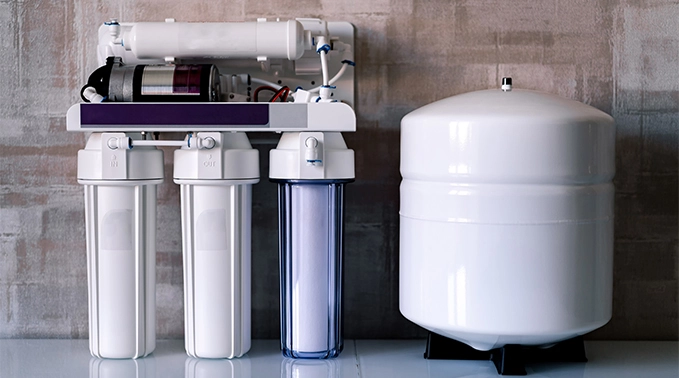
This is the classic. It’s simple in theory—catch rain from your roof, store it, use it. But the details matter. You’ll need a good catchment surface (metal roofs are best), first-flush diverters to ditch the initial dirty water, and proper filtration. For indoor plumbing, you’ll need a pump and a serious filtration/UV purification system to make it potable. The math is crucial: calculate your roof’s catchment area and your local rainfall to see if this can be your sole source.
Well Water
If you have the land for it, a drilled or driven well provides a consistent source. The big considerations here are depth, water quality (testing is non-negotiable), and—you guessed it—power. You’ll need a pump, and if you’re off-grid, that means a solar-powered or manual pump system. It’s a bigger upfront investment but offers incredible peace of mind.
Water Heating: The Sustainable Warm-Up
No one wants an ice-cold shower, even in the name of sustainability. Luckily, there are brilliant, low-energy ways to get hot water.
- On-Demand (Tankless) Water Heaters: These are tiny home favorites. They heat water only when you need it, eliminating the standby energy loss of a tank. Propane models are common for off-grid, but electric ones require a robust solar system.
- Solar Thermal Water Heaters: This is the gold standard for sunny climates. A roof-mounted collector heats a fluid, which then warms your water tank. It’s remarkably efficient and can provide most, if not all, of your hot water for free.
- Heat Pump Water Heaters: A newer, super-efficient option. They work like an air conditioner in reverse, pulling heat from the surrounding air to heat your water. They use about a third of the electricity of a standard electric heater.
Wastewater: The End of the “Away”
This is where the rubber meets the road—or rather, where the water meets the soil. You have two main streams to manage: greywater and blackwater.
Greywater Systems: Your Garden’s Best Friend
Greywater is the gently used water from your shower, bathroom sink, and laundry (kitchen sink water is often considered “dark grey” due to fats and food particles). Instead of sending it to a septic tank, you can filter it and redirect it to irrigate non-edible plants or fruit trees. The system can be as simple as a hose from your shower to a mulch basin, or as complex as a pumped, filtered, and subsurface drip irrigation setup. It cuts your water use dramatically and nourishes your landscape.
Blackwater Solutions: Dealing with the Toilet
Here’s the deal. You have a spectrum of choices, from high-tech to no-tech.
| Solution | How It Works | Best For |
| Composting Toilet | Separates liquids & solids. Solids decompose into odorless, safe compost with the help of aerobic bacteria. | Waterless systems, cabins, ultra water-conscious homes. |
| Incinerating Toilet | Electrically burns waste to a small amount of sterile ash. Uses significant power. | Places with poor soil, rocky ground, or where composting isn’t feasible. |
| Micro Flush Toilet | Uses a tiny amount of water (as little as a pint per flush) with a macerator, sending waste to a small, efficient septic tank or treatment system. | Those who want a traditional toilet experience with minimal water and waste footprint. |
Fixtures and Fittings: The Everyday Water Savers
This is low-hanging fruit. Swapping out standard fixtures for ultra-efficient ones can cut your water use by half without you even noticing. And in a tiny home, every saved gallon is a gallon you don’t have to haul, pump, or treat.
- Low-Flow Everything: Look for faucet aerators rated at 0.5 gallons per minute (gpm) and showerheads at 1.5 gpm or less. The new ones are fantastic—they mix in air to maintain pressure so you don’t feel like you’re showering in a drizzle.
- Dual-Flush or Composting Toilets: We touched on this, but it bears repeating. The toilet is the biggest water hog in a conventional home. Choosing an alternative is your single biggest water-saving act.
- Point-of-Use Water Heaters: A small under-sink unit can provide instant hot water so you’re not running the tap, waiting. It saves both water and the energy to heat it.
Putting It All Together: A Sample System Flow
Let’s imagine a hypothetical system. It might feel a bit messy, a bit interconnected—because it is. That’s the beauty.
Rainwater is collected from the metal roof, stored in a 1,500-gallon cistern. It’s pumped through a sediment filter, carbon filter, and UV light, then into a small pressure tank for household use. In the kitchen, a tiny on-demand heater provides instant hot water. The shower and bathroom sink drain into a branched greywater system that feeds a willow patch. The toilet? A simple, fan-ventilated composting model. The “output” goes to a dedicated compost bin for future non-edible plants.
See? No magic, just interconnected, thoughtful design.
The Real Takeaway: It’s About Mindful Connection
Building a sustainable plumbing system for your off-grid or tiny home isn’t a checklist. It’s a practice. You become intimately aware of your water—where it comes from, how you use it, where it goes. You notice a dry spell because your cistern level drops. You think twice about the soap you buy because it’ll end up in your garden.
That connection, that mindful feedback loop, is the true reward. It turns a utility into a relationship. And in a world of endless, invisible consumption, that’s a radical—and deeply satisfying—act of independence.